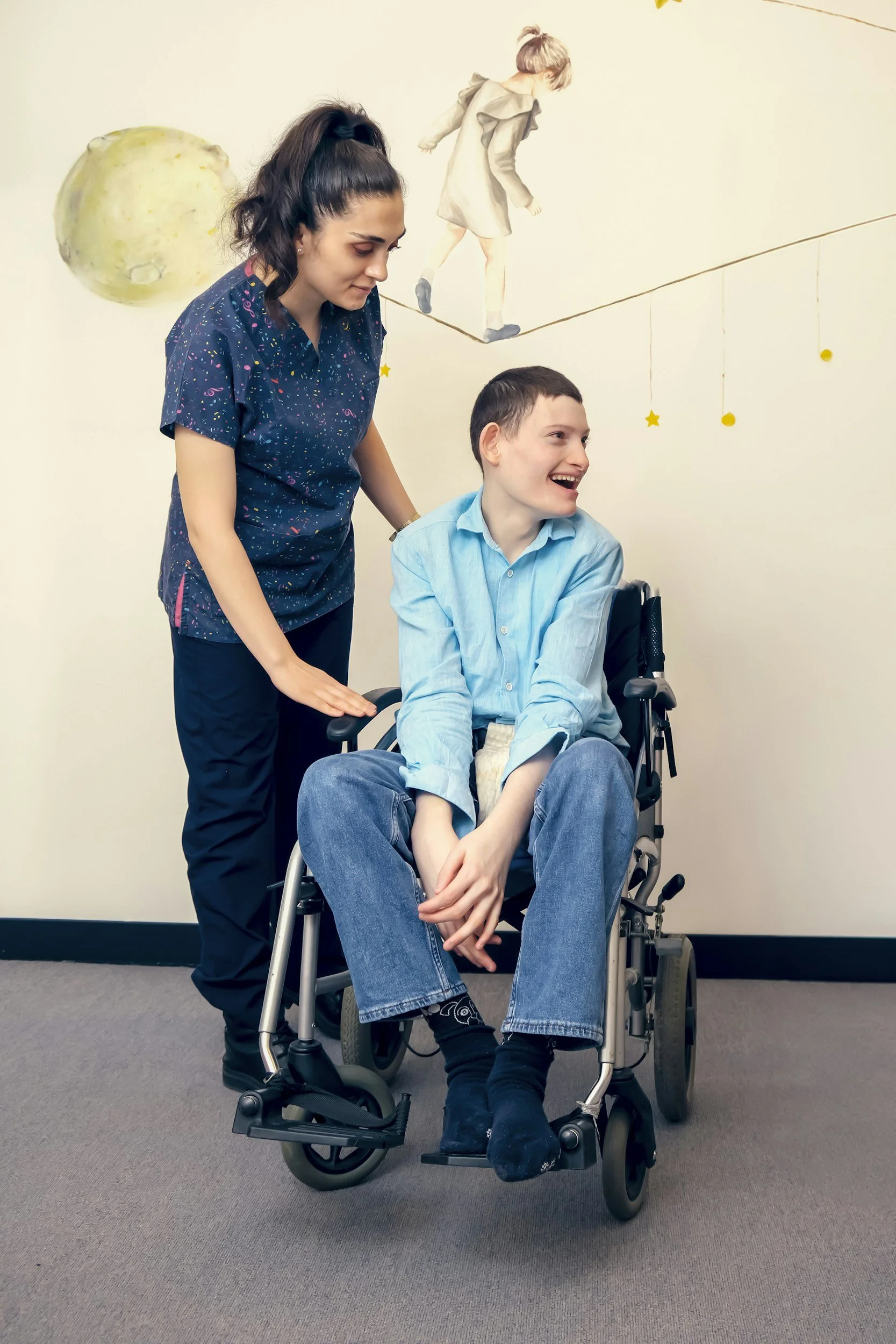
A child's diagnosis may explain some of their needs. It can never tell us the whole story of who they are.
For many parents raising children with intellectual, developmental, or cognitive disabilities, life involves navigating systems that other families rarely have to think about. There are appointments, evaluations, school meetings, therapies, and decisions about services. There are moments of celebration, exhaustion, uncertainty, and tremendous love. And somewhere in the middle of all that, there is a child who wants the same things every child deserves: connection, opportunity, dignity, joy, and the freedom to grow.
Three parents and advocates have shared stories that offer a meaningful perspective on raising and supporting children with disabilities.
Their experiences remind us that families need more than advice. They need to be heard.
1. A Mother Who Learned to Measure Life Differently
Kelly Piacenti is a mother of four and a longtime disability advocate who has served on the national board of The Arc. When her son Nick was born, doctors gave the family a very limited expectation for his life. First, they were told he might live only a few months. Later, they were encouraged to hope he would reach his second birthday. In a 2015 interview with The Arc, Kelly shared that Nick had recently celebrated his fourteenth birthday. She described how raising him changed the way she understood family, priorities, and quality of life.
The everyday inconveniences that once felt enormous became less important. She began to appreciate the significance of connection in different forms, including the meaning carried in her son's smile. Kelly also spoke about something many families recognize: the need for information, resources, and opportunities to connect with others who understand their experiences.
Her advocacy was driven partly by the knowledge that some families lack the time, resources, or energy to continually fight for services. Her story reminds us that supporting a child also means supporting the people and relationships surrounding that child.
2. A Father Who Knows Disability From Both Sides
Theodore Leonard has written about growing up with an intellectual disability and later becoming a father and disability advocate. His experience offers a perspective that is sometimes missing from conversations about children with developmental disabilities. He understands the experience of being the child whose abilities are questioned. And he understands the responsibility of being a parent who wants his children to have every opportunity available to them.
Leonard has served in regional-center leadership and advocacy roles, bringing lived experience into conversations about disability services and community participation. His story challenges a common assumption: that intellectual disability automatically determines a person's future independence, relationships, family life, or contribution to society. A diagnosis can inform the support someone needs. It cannot define the full range of experiences that person may have.
As children grow, the adults around them have an opportunity to nurture their interests, communication, decision-making, and self-advocacy.
Those opportunities matter throughout life.
3. A Mother Who Learned to Advocate With Her Daughter
Taylor Crisp, a parent advocate with The Arc of Spokane, has written about raising her autistic preteen daughter while also being autistic herself. Her story explores the complicated relationship between parental advocacy and a child's developing independence. When her daughter initially received limited accommodations through a school 504 plan, Taylor questioned whether she should push for more.
As she watched her daughter's academic and social well-being decline, she recognized the need to advocate more actively. But her approach was also evolving. Rather than making every decision on her daughter's behalf, she began placing greater emphasis on understanding what her daughter wanted, what barriers she experienced, and how they could address those challenges together. This distinction is important.
Children with disabilities deserve opportunities to participate in decisions affecting their own lives, using the communication methods and supports that work for them. For some children, that participation happens through spoken language. For others, it may involve assistive technology, gestures, visual communication, supported decision-making, or other forms of expression.
Advocacy can mean helping a child find and use their voice, while making sure the adults around them are prepared to listen.
What These Families Have in Common
These stories are different. One parent speaks about the importance of quality of life and community support. Another shares what it means to grow into adulthood with an intellectual disability. A third describes learning to advocate alongside her daughter.
Yet each story points toward the same larger truth:
Children with disabilities deserve to be understood as whole people, with interests, relationships, preferences, strengths, and futures of their own.
Their needs may change over time. Their progress may follow an unfamiliar timeline. Their families may need different forms of support at different stages. And their accomplishments deserve recognition without comparison to someone else's developmental journey.
What Does Meaningful Support Look Like?
Meaningful support begins with understanding the individual child. In school, this may include individualized instruction, accessible communication, behavioral support, appropriate accommodations, and opportunities to participate alongside peers.
At home, it may involve consistent routines, communication strategies, encouragement, and space for the child to express preferences and make choices. For families, it can mean having access to knowledgeable professionals, reliable resources, and collaborative educational teams.
It also means recognizing that parents have important expertise. They know their child's history, preferences, communication patterns, and everyday experiences. That knowledge belongs alongside professional assessments and educational planning.
The Looking Glass Children's Services Commitment
At Looking Glass Children's Services, our work centers on individualized behavioral intervention and support for children and families in the Los Angeles area. Our BII therapists work alongside educators to help students develop skills and work toward their individualized educational goals.
We understand that progress can take many forms. It may be a child learning to request assistance. Participating in a classroom activity. Navigating a transition with greater confidence. Developing a new communication skill. Or becoming more independent in an everyday routine. Every child deserves support that recognizes their individuality.
And every family deserves to feel that they have knowledgeable, compassionate people working alongside them.
Because the story of a child with a disability is still being written—and that child deserves a meaningful voice in how it unfolds.
Learn more about Looking Glass Children's Services at lookingglasschildren.com.
References and Further Reading
The Arc — A Conversation With Mother and Disability Advocate Kelly Piacenti
The Arc of California — Father's Day Stories and Advocacy, Including Theodore Leonard
The Arc of Spokane — Raising a Voice: Advocacy, Empowerment, and Seeing Through My Child's Eyes